

SPEAKERS
PLENARY SPEAKERS

Professor Sarah Cartmell
Vice Dean and Head of School of Engineering
The University of Manchester, UK
Learn more Sarah is Vice Dean and Head of School of Engineering. The School’s student and staff community is vast and diverse with around 7,000 students, 580 academic and research staff and 250 professional services staff. The School teaches large home and international cohorts of students from around 150 different countries, across Aerospace, Chemical, Civil, Electronic, Electrical and Mechanical, Engineering, Computer Science and Project Management. In addition to this, it delivers technical masters programmes in areas from manufacturing and engineering design to renewable energy systems, communications and signal processing to the management of projects and it works with over 900 PhD research students who are at the cutting edge of their fields. Sarah was appointed Professor of Bioengineering at The University of Manchester in 2014 in the School of Materials after joining Manchester in 2010. She received a B.Eng. in Materials Science with Clinical Engineering and a Ph.D. degree in Clinical Engineering from The University of Liverpool in 1996 and 2000, respectively and then furthered her studies at GeorgiaTech, Atlanta for two years as a postdoctoral research fellow. She joined Keele University in 2002 where she continued her postdoctoral studies until obtaining a Lecturership and then a Senior Lecturer position in orthopaedic tissue engineering in 2008. Sarah was head of the Department of Materials 2019-2023, which is home to nearly 2,000 students. She has previously been an elected Senate member for The University of Manchester and is now a Senate member due to her Head of School role. Sarah was the UK Biomedical Materials champion for The Royce Institute of a £235million UK government investment for advanced materials 2017-21. In this activity, she has created an interaction of a 200 strong stakeholder working group of UK academics and industry. She has prepared and led community day and strategic working group meetings. In this role she has led the creation of UK landscape activity in the biomedical materials area and has liaised with many UK and international academics and industry. Sarah has been awarded over 60 grants, >£14million of grants as lead PI and >£26million as both PI and CI from over 20 different competitive sources ranging from government, charity and industry. She is President of the UK Tissue and Cell Engineering Society. She has over 100 publications with over 8800 citations, 200 published abstracts and has given over 100 invited keynotes in the field of tissue engineering and regenerative medicine. All these publications have a common theme of orthopaedic engineering with a particular focus on X-Ray evaluation of tissue engineering constructs and biomaterials and the response of orthopaedic cells to a variety of stimuli such as mechanical forces, electrical stimulus, statins and a variety of different novel materials to support their growth into the correct tissue type/shape. She has recently created a spin off company named Retendon Ltd to translate her tendon repair product portfolio. She has been a review panel member for the government funding such as the BBSRC, MRC and Innovate UK and has been an external evaluating panel member and UK expert advisor to the European Union as a member of The European Cooperation in the field of Scientific and Technical Research (COST) in the ‘Biomedicine and Molecular Biosciences’ Domain. She is also a reviewer for ERC, EU H2020 Marie Skłodowska Curie Award Individual Fellowships and Integrated Training Networks, Natural Sciences and Engineering Research Council of Canada, Irish Research Council, Czech Science Foundation and Israel Science Foundation. She is the Speciality Chief Editor for Regenerative Technologies, a section of Frontiers in Medical Technology Journal and is an associate editor for ‘Science and Technology of Advanced Materials (STAM)’.

Associate Professor Ricardo Levato
Utrecht University, at the University Medical Center Utrecht, and at the Regenerative Medicine Center
Utrecht, Netherlands
Learn more Riccardo Levato is Associate Professor at Utrecht University, at the University Medical Center Utrecht, and at the Regenerative Medicine Center Utrecht (Netherlands), and holds a cum laude PhD from the Technical University of Catalonia (Spain). His research focuses on developing lab-made tissues and designer organoids for personalized therapies and regenerative medicine, and as advanced in vitro models for drug discovery. His team develops advanced light-based printing techniques in combination with smart cell-instructive biomaterials and stem cell technologies, and pioneered the development of high-throughput volumetric bioprinting and AI-powered context-aware bioprinting. Key applications include musculoskeletal, liver, pancreas and vascular tissue engineering. He co-authored >90 papers and several patents and supervised more than 20 PhD students and 7 postdocs. He is an European Research Council laureate, and he received several awards for research, the Jean Leray (2021) and Robert Brown (2022) awards from the European Society for Biomaterials and from TERMIS, the mid-career award from the International Society for Biofabrication (2023), the rising star award from Materials Today (2025), and the International O&J Peters Prize honoring excellent research in the field of production engineering (2025). He is member of the Young Academy of Europe, associate editor for Materials Today Bio, editorial board member for the journal Biofabrication, scientific advisor for Readily3D SA, and he serves on the board of directors of the International Society for Biofabrication.

Distinguished Professor Leslie Yeo
RMIT University, Australia
Learn more Leslie Yeo is a Distinguished Professor of Chemical Engineering at RMIT University, Australia. He received his PhD from Imperial College London in 2002, for which he was awarded the Dudley Newitt prize for a computational/theoretical thesis of outstanding merit. Prior to joining RMIT, he was a postdoctoral research associate in the Department of Chemical & Biomolecular Engineering at the University of Notre Dame, USA, after which he commenced a faculty position at Monash University. He also held the Australian Research Fellowship and Australian Research Council Future Fellowship from 2009 to 2017. Dr Yeo was the recipient of the 2007 Young Tall Poppy Science Award from the Australian Institute for Policy & Science ‘in recognition of the achievements of outstanding young researchers in the sciences including physical, biomedical, applied sciences, engineering and technology’, and several awards for excellence in research and innovation both at Monash and RMIT. Dr Yeo is co-author of the book Electrokinetically Driven Microfluidics & Nanofluidics (Cambridge University Press), and the author of 215 journal publications and 65 patent applications. He currently serves as Editor-in-Chief of the American Institute of Physics journal Biomicrofluidics and sits on the editorial board of several journals.

Professor Fariba Dehghani
Director of Bioengineering Research University of Sydney, NSW
Learn more Professor Fariba Dehghani is Director of Bioengineering Research at the University of Sydney, leading a multidisciplinary team focused on innovative solutions in regenerative medicine, health, and nutrition. Her research spans biomaterials design, medical implants, biosensors, drug delivery, and bioactive compounds, supported by collaborations across engineering, science, medicine, and industry. Professor Dehghani earned her PhD in Chemical Engineering from UNSW and has held key roles including Director of an ARC Training Centre. She has received prestigious awards for innovation from Engineers Australia and the Chemical Engineering Society, as well as the University of Sydney Vice Chancellor’s Awards for Outstanding Supervision and Industry Engagement. Recognized nationally for her contributions, she has mentored over 60 HDR students and 20 postdoctoral researchers, including entrepreneurs who have successfully established start-up companies. Her work has fostered strong industry partnerships and secured significant funding globally.
KEYNOTE SPEAKERS

Associate Professor Sara Baratchi
Mechanobiology and Microfluidics Laboratory
Baker Heart and Diabetes Institute
Learn more.... A/Prof Baratchi heads the Mechanobiology and Microfluidics Laboratory at the Baker Heart and Diabetes Institute, co-leads the Heart Attack Research Program, and is the 5th Alice Baker and Eleanor Shaw Gender Equity Fellow. She is also the President of the Australian Society for Mechanobiology and holds an academic appointment at the University of Melbourne. Her research investigates how mechanical forces regulate immune and vascular cell behaviour in health and disease. By integrating engineering, immunology, and clinical science, she has pioneered organ-on-a-chip models of human blood vessels and heart valves, uncovering mechanisms underlying calcific aortic valve disease and atherosclerosis and identifying new therapeutic strategies. Her current work focuses on how vascular stiffening and altered haemodynamic forces drive pathological responses, with the goal of establishing new foundations for mechanism-based cardiovascular therapies.
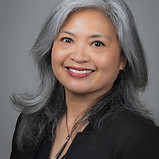
Associate Professor Jaydee D. Cabral
Centre for Bioengineering & Nanomedicine
University of Otago
Learn more.... Dr. Jaydee D. Cabral is an Associate Professor in the Department of Oral Rehabilitation, Centre for Bioengineering & Nanomedicine, Faculty of Dentistry, University of Otago, Dunedin. Dr. Cabral’s group investigates emerging biofabrication and biomaterials technologies for regenerative medicine and medical device innovation. Her multidisciplinary research integrates advanced hydrogel design, 3D bioprinting, additive manufacturing, and surface engineering to translate fundamental science into clinically relevant solutions. She was a key researcher in the development of Chitogel®, an FDA-approved and commercialised wound-healing hydrogel, exemplifying successful bench-to-bedside translation. Associate Professor Cabral has secured over $18 million in competitive research funding, publishes in leading biomaterials journals, and actively builds cross-sector partnerships to accelerate the clinical impact of emerging bioengineering technologies. Her research vision centres on building cohesive multidisciplinary teams to translate emerging bioengineering technologies into clinically impactful solutions addressing unmet healthcare needs.

Dr Ann Na Cho
School of Biomedical Engineering, Faculty of Engineering
The University of Sydney
Learn more.... Dr Ann-Na Cho is a Senior Lecturer (Sydney Horizon Fellow, NHMRC Emerging Leader Fellow) in the School of Biomedical Engineering, Faculty of Engineering at The University of Sydney. She holds a prestigious Horizon Fellowship to develop a near-complete human brain model - human brain organoids. Trained as a stem cell engineer, bio-manufacturer and neuroscientist, her expertise encompasses stem cell biology, tissue engineering, microfluidics device, biomaterial chemistry, nanomedicine, drug development, and bioinformatics. Dr Cho's primary focus is on addressing health challenges through creating human brain organoids that integrate innovative biomedical engineering tools. Organoids are laboratory-grown organ models that mimic human physiology. They can be used to understand brain mechanism and disease, and test the effects of new therapeutics including drugs without the need for animal models. She established the world's first Tissue engineered human brain-on-a-chip combining human pluripotent stem cells, 3D brain-mimetic biomaterial and organ-on-a-chip. She has been named as inventor for seven international patents to date and her pioneering human brain organoids are being used in research into neuropsychiatric and neurodevelopmental diseases (Nature Communications 2021, Nature Biomedical Engineering 2018, Science Advances 2023). These next-generation model platforms enable clinical intervention by collaborating industrial partners, such as pharmaceutical companies, for personalised and point-of-care therapy. Dr Cho is a Principal Investigator of the new human Brain Microphysiological System (hBMS) Laboratory in the School of Biomedical Engineering. She received her PhD from the Department of Biotechnology at Yonsei University in 2020 and has previously worked as a Postdoctoral Researcher at the Charles Perkins Centre and Vice-Chancellor's Research Fellow at Macquarie University.

Dr Jiao Jiao Li
Senior Lecturer in Biomedical Engineering
University of Technology Sydney (UTS)
Learn more Dr Jiao Jiao Li FRSN FRSB FIEAust is a Senior Lecturer in Biomedical Engineering at University of Technology Sydney (UTS), and a Rebecca L Cooper Medical Research Foundation Al & Val Rosenstrauss Fellow. Her research in regenerative medicine focuses on developing combinational approaches including stem cells, extracellular vesicles, bioactive materials, and nanomaterials to treat chronic diseases, particularly bone and joint disorders. Recent recognitions of her research include 2024 Eureka Prize for Emerging Leader in Science, 2023 Metcalf Prize for Stem Cell Research, and 2022 Young Investigator Award from Tissue Engineering & Regenerative Medicine International Society (TERMIS). Professionally, she serves on the Australian Research Council (ARC) Advisory Committee, Board of Australian Institute of Policy & Science (AIPS), and Biomedical College Board of Engineers Australia. Her editorial roles include Associate Editor of Cartilage, Editorial Advisory Board of ACS Biomaterials Science & Engineering, and International Editorial Board of Journal of Orthopaedic Translation.

Dr Haiyan Li
Senior Lecturer, Department of Biomedical Engineering, School of Engineering
RMIT University
Learn more Dr. Haiyan Li is currently a Senior Lecturer in the Department of Biomedical Engineering, School of Engineering, RMIT University. She received her Ph.D. in Materials Engineering in 2005 from the Shanghai Institute of Ceramics, Chinese Academy of Sciences. Over the past two decades, Dr. Li has devoted her career to teaching and research in the fields of biomaterials and tissue engineering. She completed two postdoctoral research fellowships at Monash University (Australia, 2006-2008) and INSERM (France, 2008-2010) before joining Shanghai Jiao Tong University (SJTU) in 2011. During her ten years at SJTU, she was appointed tenured Associate Professor before moving to RMIT University in January 2021. Dr. Li has an outstanding research record, with over 120 peer-reviewed publications and 8 patents (5 granted), amassing approximately 9,600 citations and an H-index of 54. She has also served as Chief Investigator on 11 major research grants, including four funded by the National Natural Science Foundation of China and one from the CASS Foundation (Australia). Her current research focuses on the development of bioactive hydrogels and microgels for cancer therapy, tissue regeneration, and 3D printing applications.

Professor Zhong Alan Li
Department of Biomedical Engineering
Chinese University of Hong Kong
Learn more Prof. Zhong Alan Li joined the Department of Biomedical Engineering at the Chinese University of Hong Kong as a Vice-Chancellor Assistant Professor in 2022. He also holds multiple other affiliations, including Associate Member of the School of Biomedical Sciences, Member of the Institute for Tissue Engineering and Regenerative Medicine (iTERM), Research Associate (by courtesy) at the Peter Hung Pain Research Institute (PHPRI) of CUHK, member of the State Key Laboratory of Digestive Disease, and Co-Principal Investigator at the Center for Neuromusculoskeletal Restorative Medicine (CNRM) located at the Hong Kong Science and Technology Park (HKSTP). Before joining CUHK, he was a Postdoctoral Associate and later a Research Assistant Professor at the University of Pittsburgh School of Medicine (UPSOM) in Pennsylvania, US. His research focuses on organs-on-chips, organoids, functional biomaterials, biofabrication, and neuromusculoskeletal regeneration. His research is highly interdisciplinary and interfaces engineering, biology, and medicine. Dr. Li has been recognized with several awards, including the Wake Forest Institute for Regenerative Medicine (WFIRM) Young Investigator Award and the Orthopaedic Research Society (ORS) 3Rs Award.

Professor Krasimir Vasilev
Director of the Biomedical Nanoengineering Laboratory
Colllege of Medicine and Public Health
Flinders University, Australia
Learn more.... Professor Vasilev completed PhD in Max-Plank Institute for Polymer Research (Mainz, Germany) in 2005. He is currently a Matthew Flinders Professor, NHMRC Leadership Fellow and the Director of the Biomedical Nanoengineering Laboratory in the College of Medicine and Public Health at Flinders University. Professor Vasilev has attracted in excess of $30M in research funding from Government competitive grants and Industry, published more than 350 papers, > 16,000 citation and H-index=71 (m-index>3). He has been awarded several prestigious Research Fellowships from ARC, NHMRC and the Humboldt Foundation, and other awards such as the John A. Brodie Medal from Engineered Australis for achievements in Chemical Engineering.
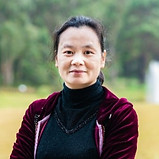
Professor Yuling Wang
School of Natural Sciences, Faculty of Science and Engineering,
Macquarie University, Australia
Learn more.... Prof Yuling Wang is an ARC Future Fellow, and an NHMRC Investigator Leadership Fellow at Macquarie University. She is also a Fellow of the Royal Society of Chemistry (FRSC). Yuling completed her PhD at the Chinese Academy of Sciences in 2009. She was then awarded an Alexander von Humboldt (AvH) fellowship (2010) and a German Research Foundation (DFG) Individual Grant Fellowship (2012), working at the University of Duisburg-Essen, Germany. In 2014, she received the ARC DECRA fellowship and worked at the University of Queensland. Since 2017, she has established her group with 6 postdoctoral research fellows and 12 PhD students. Her research focuses on platform technology that uses functional nanomaterials and nanotechnology for biomarkers sensing, aiming to enhance in vitro diagnostics and personalized medicine. Her NHMRC Inverstigator Grant (Leadership 1) amis to develop new nanotechnology to translate small extracellular vesicles (sEVs) as cancer biomarker for personalized triple negative breast cancer management. Group website: https://www.mq.edu.au/research/research-centres-groups-and-facilities/groups/nanosensors